

Alexis Nicolaou
Partner, Digital Assets, Kreston ITH, Cyprus
How blockchain works
February 5, 2026
Blockchain technology and crypto assets
In the current global economic environment, understanding how blockchain works alongside the rapid advancement of digital technologies is fundamentally reshaping how value is created, stored, and transferred. As we move through 2026, the integration of decentralised systems into traditional finance has become a cornerstone of modern business strategies.
1. Understanding the infrastructure: how blockchain technology works
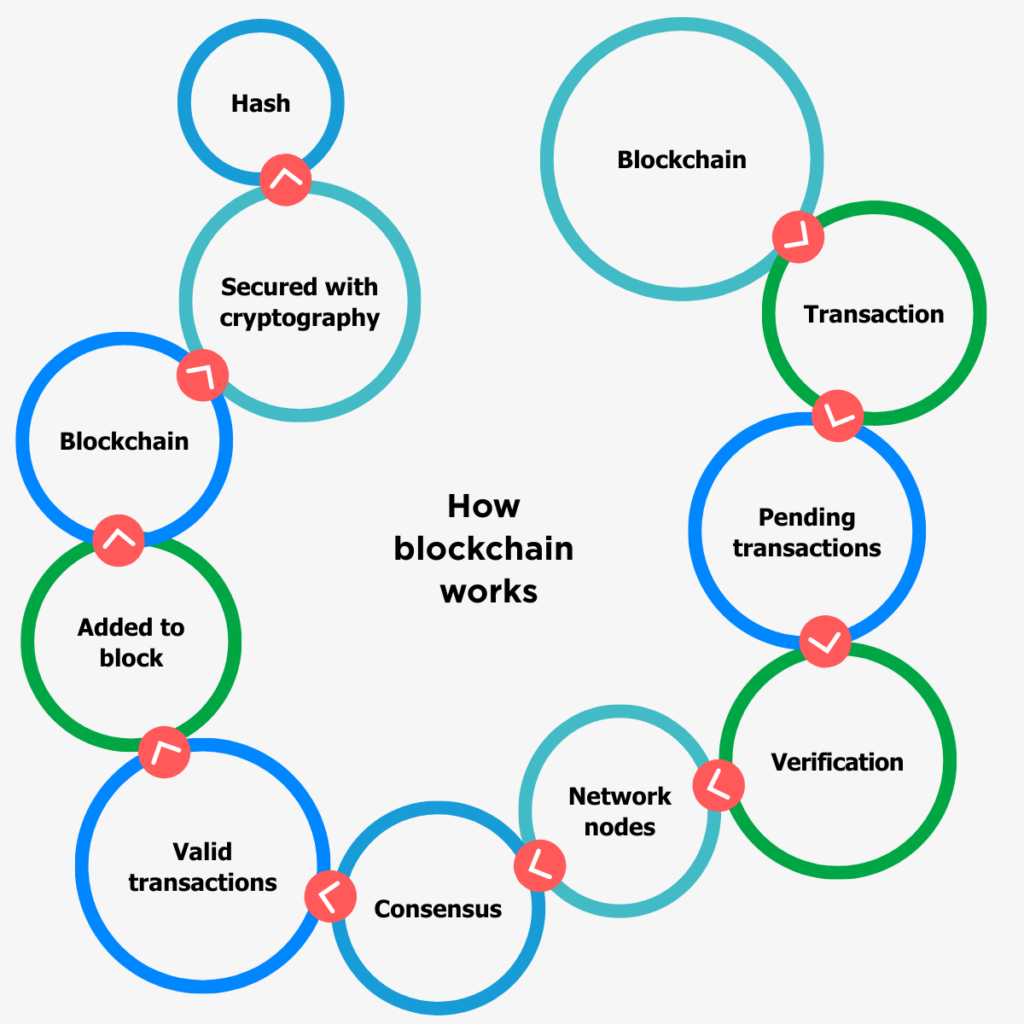
Blockchain is defined as a distributed ledger or decentralised database that maintains a continuously updated record of transactions and ownership. Eliminating the need for a central administrator, such as a bank or government, it utilises a network of replicated databases synchronised via the internet.
The core functional components include:
- The record: representing any data point, such as a transaction, a contract, or a document.
- The block: a verified bundle of records that is timestamped and cryptographically secured.
- The chain: a chronological series of blocks that forms an immutable, transparent, and traceable ledger.
Figure 1: How blockchain works
Why blockchain matters
Blockchain is significant because:
- It enables peer–to-peer transfers of value without the need for intermediaries.
- It also allows the assignment of digital value to real-world items, like a house or a piece of art, making them significantly easier to buy, sell, and track.
- It enables the proof of authenticity of a digital item independently of the owner, issuer, and creator.
Why does this matter? Because for the first time, we have a record that no one can delete or cheat. Instead of trusting any third party, we trust a transparent system that everyone can see.
2. Taxonomy of crypto assets
The use of crypto assets has evolved rapidly since the 2017 market cycle. Today, their use extends well beyond tokens for payment purposes. At present, there is no single universal taxonomy of crypto assets used by all international standard-setting bodies. However, a common basic taxonomy comprises the following main categories:
2.1. Payment/exchange/currency tokens (including Stablecoins):
Often referred to as VCs (Virtual Currencies) or cryptocurrencies. Typically, they do not provide specific rights (as investment or utility tokens do) but are used as a means of exchange to enable the buying or selling of goods/services provided by someone other than the issuer, or for investment and storage of value. Bitcoin is a primary example.
2.1.1. Stablecoins:
A specific form of payment/exchange token designed to maintain a stable value. They are typically asset-backed (by fiat, physical collateral, or other crypto assets) or function as algorithmic stablecoins (using protocols to stabilise volatility).
2.2. Platform tokens:
Designed to support blockchain platforms (like Ethereum) on which decentralised applications (DApps) are built. Ethereum operates with a native cryptocurrency called Ether (ETH), which is a platform token (often categorised as a high-level utility token) used to pay transaction fees (gas) and facilitate smart contracts.
2.3. Security tokens:
These represent the bridge between blockchain and traditional finance. They typically provide ownership rights or entitlements, such as dividends or profit-sharing. They introduce the concept of ‘Tokenisation’ and ‘Fractional Ownership’, allowing tangible or intangible assets to be divided into digital, fungible tokens. Unlike utility tokens, these are usually issued via STOs (Security Token Offerings) and are subject to securities legislation.
2.4. Utility tokens:
Tailored for access to specific applications or services within a network. They are not primarily stores of value but grant holders functional benefits, such as voting rights, network access, or discounts within a specific ecosystem.
Hybrid nature: It is important to note that many crypto assets are hybrids. For instance, Ether (ETH) functions as a Utility Token (to power the EVM), a Payment Token (accepted by many merchants), and often exhibits characteristics of an Investment Token due to its staking rewards and potential for appreciation.
3. Market dynamics and institutional adoption
The digital asset sector is no longer an emerging niche; it is a massive ecosystem characterised by rapid growth and institutional integration.
- User base: Major banks and consultancies increasingly frame blockchain/crypto adoption as a ‘next billion users’ story; BCG has projected crypto users could reach ~1bn by 2030.
- Institutional shift: Multiple institutional surveys show accelerating adoption: State Street finds ~70% of institutions expect to increase digital-asset exposure over the next year, and PwC/AIMA finds nearly half of traditional hedge funds already have exposure (rising to 55% in 2025).
- Asset growth: Stablecoins are projected to reach $2 trillion by 2028, while the tokenisation of Real-World Assets (RWA) is expected to hit $5.3 trillion by 2029.
- Investment trends: Surveys indicate asset managers are actively building crypto product capability: more than half report being already live or in business-case/action-plan phases for crypto offerings; and manager preference remains concentrated in BTC and ETH as the primary ‘core’ exposures.
4. Conclusion
Blockchain technology is a transformative innovation that offers unprecedented transparency, security, and immutability. As the industry matures, the integration of blockchain with AI and the tightening of global legislation make professional guidance and understanding of how to audit digital assets or the tax implications of blockchain essential.
Kreston ITH is committed to helping organisations capitalise on these opportunities while maintaining the highest standards of integrity and compliance.