
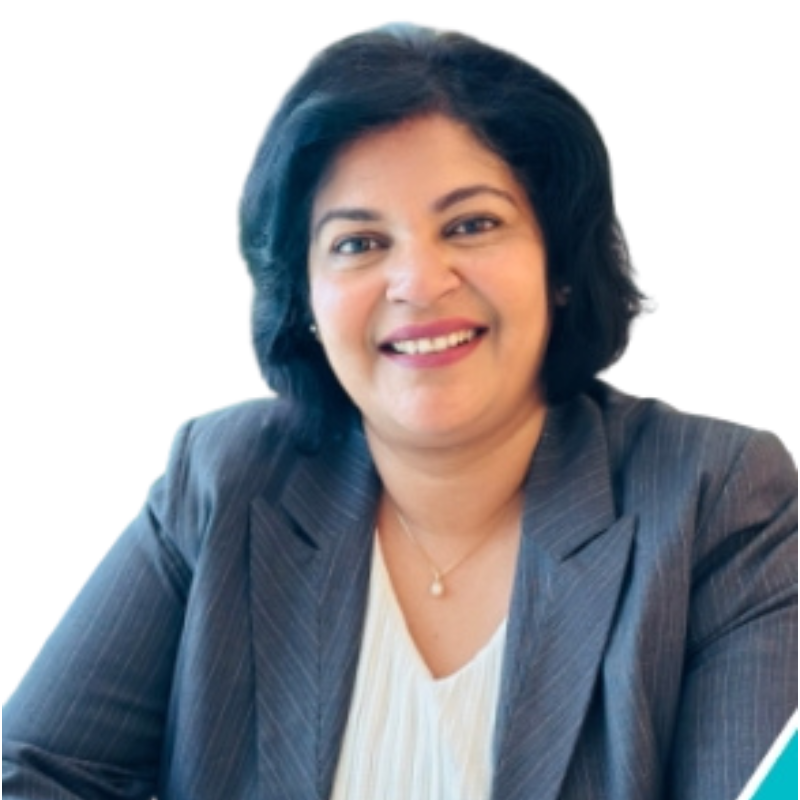
Sangeetha Thomas
CEO, Kreston ME Consulting
Reshaping audit and financial consulting in the GCC
April 28, 2026
The GCC is not just adapting to digital change. It is driving it. Governments across all six member states have committed to technology-led growth. The UAE is set to expand at 4.8 percent in 2025. For audit and consulting professionals, keeping pace is not a competitive edge. It is a basic requirement.
AI investment is accelerating change across the GCC
UAE spending on AI in 2024 and 2025 exceeded AED 543 billion. This includes state-backed entities such as MGX, launched by G42 and Mubadala in early 2024. Saudi Arabia has pledged a further USD 100 billion to AI systems and data infrastructure through Project Transcendence.
“These are active spending decisions, not targets,” said Sangeetha Thomas, CEO of Kreston ME Consulting. “The clients that audit and advisory firms serve are being rebuilt around these tools. Advisory methods must move at the same pace.”
AI adoption across the GCC has moved from strategy to daily use. By 2023, 62 percent of GCC firms were using AI in at least one business function. In the UAE, that figure was 42 percent. A further 65 percent reported a major increase in AI rollout over the prior 24 months. By 2025, 80 percent of UAE professionals were actively using AI tools. Banks such as Emirates NBD and ADCB now use AI for fraud checks, credit decisions, and customer service.
“The data these systems produce is far beyond what standard audit methods were built to handle,” said Sangeetha.
Audit functions are evolving with AI and new standards
The rules for internal audit have changed. The 2024 Global Internal Audit Standards, in effect from January 2025, include a dedicated standard on technological resources. It requires every internal audit function to adopt the right technology as a condition of meeting the standards. The same standards also replace annual risk planning with a continuous cycle, so that audit keeps pace with how fast risks change.
Mashreq, one of the UAE’s leading banks, has put this into action. The bank has moved its internal audit work from set-cycle reviews to a live, AI-powered model. It states that reviewing risks every two to three years no longer adds enough value. Its full audit team now uses AI tools daily.
“A dedicated audit engine is being built to track risk at all times across connected systems,” said Sangeetha. “Audit teams must also review AI systems end to end. This means checking model logic, data quality, and how outputs are reached.”
Consulting in the GCC is adapting to new client and regulatory demands
The GCC consulting market was on track to exceed USD 6 billion in 2024. The UAE alone grew 15.2 percent to reach USD 1.1 billion. Demand is strongest in tech advisory, financial services, and compliance. Leading firms are already changing how they work. Deloitte Middle East launched an AI Factory as a Service for GCC clients in October 2024. By June 2025, it had extended its Global Agentic Network across the region, embedding AI-driven tools into client work. In its 2026 trends report, the firm states that boards and regulators now require AI systems to be fully explainable in financial services.
The IAASB reinforced this direction in September 2024, adopting a formal Technology Position that commits to removing barriers in audit standards to the use of technology and to introducing new requirements on how auditors engage with AI-driven processes. Signing off on AI-driven financial processes now means reviewing model logic, data flows, and system outputs. These tasks were not part of the standard audit toolkit until recently.
The UAE was the first country to appoint a Minister of State for Artificial Intelligence, in 2017. It has built a clear set of rules since then. The UAE AI Charter, issued in June 2024, sets 12 ethical principles for AI use. Openness, audit readiness, and human oversight are at the core. The DIFC and ADGM each run their own AI rules for financial firms. Both require clear model outputs and regular AI audits. For consultants and advisors, knowing these rules is no longer a niche skill. It is core knowledge.
“State investment, rising adoption, new standards, and clear rules have changed what clients expect from audit and consulting firms in the GCC,” shared Sangeetha. “AI-enabled services are now the baseline, not the premium option. Kreston firms works at this intersection, placed to help clients meet the governance and technical demands of one of the fastest-moving markets in the world.”