Kreston Tesla Türkiye
October 8, 2026
October 8, 2026
September 15, 2026
Kreston NBB Professional Consulting has received approval from the Board of Saudi Arabia’s Capital Market Authority (CMA) to provide audit services to entities subject to the Authority’s supervision. Click here to access the full article, or read a summary down eblow.
The registration represents an important milestone for Kreston NBB and strengthens the Kreston Global’s brand presence in Saudi Arabia, further enhancing the firm’s position within audit and professional services markets.
Under the approval, Kreston NBB is registered to carry out audit engagements for entities supervised by the CMA, in accordance with the conditions and requirements established under the Capital Market Law and its Implementing Regulations. The firm will be able to undertake audit engagements for listed companies and Real Estate Investment Traded Funds (REITs) once the relevant additional conditions and requirements have been satisfied.
The CMA’s registration framework for auditors plays an important role in supporting confidence, transparency and disclosure across Saudi Arabia’s capital market. High-quality financial statements and financial information enable investors and other stakeholders to make informed and timely decisions.
Following Kreston NBB’s registration, the number of accounting firms registered with the CMA has increased to 17, alongside 58 registered Certified Public Accountants (CPAs).
The development comes as Saudi Arabia continues to strengthen the regulatory framework surrounding audit services for capital market participants. In 2022, the CMA amended its Rules for Registering Auditors of Entities Subject to the Authority’s Supervision, originally issued in 2018, with the aim of further developing the auditor registration process.
For more information on doing business in Saudi Arabia, click here.
April 24, 2026
Saudi Arabia’s accounting and advisory market is continuing to evolve at pace, driven by sustained multinational investment, regulatory reform and shifting client demands, according to Nefal Barrak Beneyyah, Managing Partner at Kreston NBB.
On the ground, the Kingdom’s regional headquarters (RHQ) programme is still attracting significant interest from global corporates.
“Yes, multinationals are setting up regional headquarters in significant numbers as of early 2026,” Beneyyah says. “By early 2026, over 500 multinational companies have established RHQs in the Kingdom, surpassing original 2030 targets. Major participants include tech giants like Amazon.”
He adds that the influx is having a tangible effect on the domestic market structure.
“The influx of these administrative hubs has reshaped local economies in several key ways. Many local businesses have successfully found niches by leveraging local knowledge or collaborating with global players.”
At the same time, regulatory strengthening is underpinning confidence in the profession. Beneyyah points to the expanding role of the Saudi Organization for Chartered and Professional Accountants (SOCPA) as a key factor.
“Evidence suggests that the increased regulatory power and standard-setting authority of SOCPA have significantly improved confidence in the local accounting industry,” he says. “By aligning local practices with global benchmarks and enforcing stricter oversight, SOCPA has enhanced the transparency and reliability of financial reporting in the Kingdom.”
He highlights the importance of international alignment in particular.
“SOCPA has led the transition to International Financial Reporting Standards and International Standards on Auditing. This alignment ensures that Saudi financial statements are comparable and consistent with global norms, facilitating easier access to international capital markets.”
However, the broader regional environment continues to shape client behaviour.
“In the current Middle East climate, confidence is often tempered by concerns over energy price volatility, supply chain disruptions, and regional escalation,” Nefal notes.
This has prompted a shift in how firms deliver services.
“The conflict has generally forced some main shifts in service delivery, such as moving from standard financial modelling to intensive scenario planning and stress testing,” he says. “There is also increasing reliance on secure, remote communication to maintain continuity when travel or physical office presence is disrupted, and a greater focus on on-the-ground expertise to navigate rapidly changing local regulations and sentiment.”
Despite these headwinds, Nefal emphasises that Saudi Arabia’s reform agenda remains a central driver of growth.
“Saudi Arabia has implemented an extensive wave of regulatory reforms over the last 12 months, primarily focused on economic liberalisation, digital transformation, and foreign investment in line with Vision 2030,” he says.
He points in particular to recent changes in the investment framework.
“The government has approved executive regulations for a redesigned Investment Law aimed at ensuring equal treatment for local and foreign investors and simplifying the process for establishing or liquidating investments,” he explains. “New reforms allow foreign investors to hold direct legal title to listed securities, replacing the previous swap framework.”
Looking ahead, Nefal expects momentum to continue as global conditions stabilise.
“Under Vision 2030, we anticipate a huge flow of international businesses into Saudi Arabia in the coming years. This will boost up once world economies start stabilising. Vision 2030 is going to be a game changer,” he says.
For his own firm, that outlook is shaping strategic planning.
“We are very keen to make ourselves ready for this growth while remaining compliant with international standards of services,” he says. “Under the umbrella of Kreston Global, we believe this will provide trust to international investors.”
He also signals potential consolidation in the market.
“Kreston NBB also has plans to merge or acquire a same-size competitor. It will increase assets and market share, bring additional skills and expertise, and increase the possibility of obtaining capital,” he adds. “This will strengthen our chances to grow and increase our market share in the industry.”
April 23, 2025
Kreston Global has today welcomed Jordan firm, Alothman Group International (AGI), to the Kreston Global network.
AGI was established in 1980 and for the last 40 years has built up a client base ranging from small owner-managed businesses to larger multinational corporations operating on a global basis. As a consequence of increasing market complexity, AGI advises clients across a number of industries including Insurance and re-insurance; Not for Profit Organizations (NGO); Financial Services; Public sector; Trading and distribution; Information technology; Retail & FMCG, Contracting and construction, and Healthcare.
Made up of three partners, AGI is one of the larger mid-market accounting and advisory firms in Jordan, employing 35 staff and based in Amman. They have been active internationally for many years and are well-equipped to assist and serve international businesses seeking to invest in Jordan.
The addition of AGI to Kreston Global’s network further strengthens its Middle East region, which consists of 13 member firms across 10 countries providing a range of financial, audit, accounting, taxation, and other advisory services to large and mid-sized businesses requiring inbound and outbound growth support and set up.
Liza Robbins, Chief Executive of Kreston Global, said:
“We are really pleased to welcome AGI to our network. Our Middle East region is flourishing and our firms are incredibly entrepreneurial and ambitious. AGI fits extremely well into this portfolio and Jordan certainly is home to many middle eastern businesses wishing to expand, as well as offering opportunity for inward investment. I am very excited to see how the next year unfolds in this busy market and to introduce AGI to our network.”
Faisal Othman, Executive Director at AGI said:
“AGI is delighted to become part of the well-regarded Kreston Global network and ensure our clients have access to international expertise for their own growth ambitions. As a firm with considerable international experience we can see that membership will assist us not only with client needs but also being able to exposure our people to knowledge sharing, training and development opportunities globally and regionally. We very much look forward to meeting our new Kreston colleagues over the course of the coming months.”
March 5, 2025

This is a general guide only and not designed to cover every scenario and the nuances of VAT. Specific advice according to each transaction or supply should always be sought from a VAT specialist.
January 17, 2025
January 8, 2025
The United Arab Emirates (UAE) has emerged as a premier destination for global entrepreneurs, with over 1 million registered companies, expanding into the UAE is a key strategic decision for global businesses. The UAE’s transformation into a hub for international business can be attributed to several key factors, including strategic location, government support, and a pro-business environment.
Ennogen Healthcare, a UK-based pharmaceutical company, is among the many international companies that have expanded their operations to the UAE. In a recent interview, Jason Tate, Chief Financial Officer of Ennogen Healthcare, shared his insights on why the UAE was chosen as their base for expansion and how their journey has been facilitated by Kreston Menon.
Tate outlines the strategic appeal of the UAE, highlighting three primary reasons for their decision to expand into the region. First and foremost, the UAE’s geographic location offers unparalleled access to key markets. Positioned as a gateway between Asia, Europe, and the wider Middle East, the UAE allows companies like Ennogen Healthcare to efficiently reach a broad spectrum of markets while maintaining proximity to their European base.
“The proximity of the UAE to other regions around the world, including Asia and the subcontinent, while remaining close to Europe, was a critical factor for us,” Tate explained. This accessibility has made the UAE a preferred destination for companies seeking to expand their global footprint.
Another crucial factor is the UAE’s talent pool, that is enriched by a diverse, multicultural workforce attracted by the country’s high quality of life.
“The talent pool that’s available here is attracted by the lifestyle and the agglomeration of skills from around the world,” said Tate. The ability to draw skilled professionals from various global markets has been instrumental in Ennogen Healthcare’s success in the UAE, as the company operates in a highly regulated industry that requires top-tier expertise.
Lastly, the pro-business environment fostered by the UAE government has been a significant enabler. The UAE’s regulatory framework is designed to be business-friendly, reducing the bureaucratic barriers that often hinder international expansion. Tate noted, “The pro-business environment, which the government leads, helps us to drive forward our success.” This environment, coupled with the UAE’s continuous efforts to streamline business operations, has made it an attractive destination for companies looking to establish a presence in the region.
The role of professional services firms like Kreston Menon in supporting international businesses cannot be overstated. When Ennogen Healthcare began considering its expansion into the UAE, the company evaluated several firms, including the Big Four, before deciding that Kreston Menon was the best fit for their needs. “Kreston Menon was introduced to me by a fellow professional, and we assessed their capability in the UAE compared to other firms,” Tate recalled. “We considered that Kreston Menon was best placed in the UAE to give appropriate local advice for the region, which is important in the process of setting up and also expanding.”
Kreston Menon’s local expertise and understanding of the UAE’s regulatory landscape proved invaluable as Ennogen Healthcare navigated the administrative complexities of establishing operations in the country. The firm provided tailored advice and support, ensuring a smooth transition for Ennogen Healthcare as they set up their UAE base.
As the UAE continues to attract a growing number of international businesses, Tate offered some advice for those considering expansion into the region. He emphasised the importance of understanding the local market and leveraging the UAE’s business culture.
“The UAE provides a very dynamic environment for interpreneurs, attracting talent and facilitating the sharing of knowledge,” Tate observed.
He also highlighted the importance of being strategic in selecting a location within the UAE that aligns with the company’s business objectives. Proximity to key markets, access to talent, and ease of doing business should all be considered when making this decision.
Reflecting on Ennogen Healthcare’s journey, Tate rated their success in the UAE as nine out of 10, acknowledging that while they have achieved significant milestones, there is still potential for further growth. “We’ve arrived here, set up the business, and begun to achieve some of our early goals,” Tate said. “But we’re also beginning to identify new opportunities that we didn’t anticipate before we came here. As a consequence, I’ll be moving larger parts of the business out to the UAE in the coming months.”
This positive outlook is indicative of the broader trend among interpreneurs in the UAE.
The country’s ongoing efforts to enhance its business ecosystem and a commitment to creating a competitive and investor-friendly environment have positioned it as a global leader in attracting foreign investment.
As more international entrepreneurs discover the opportunities that the UAE has to offer, the country
is poised to continue its ascent as a top destination for global business. With firms like Kreston Menon offering essential support, and the UAE government’s unwavering commitment to fostering a pro-business climate, the future looks bright for interpreneurs aiming to make their mark in the UAE.
If you are thinking about expanding into the UAE, please get in touch.
January 7, 2025
The third edition of Going Global is now available, offering key insights into the mid-market outlook in the Middle East. This edition explores current trends, challenges, and opportunities for mid-sized businesses across the region.
Download the latest magazine here
Kreston Global boasts a strong presence in the Middle East, with 13 member firms spanning 9 countries. Backed by a network of more than 800 professionals across 40 offices, the region is well-equipped to support businesses looking to expand into this dynamic market.
The Middle East has emerged as a key area of interest for numerous international organisations and those with global ambitions. It offers a compelling combination of robust commercial opportunities and untapped markets.
In this issue of Going Global, Middle East edition, we look at how AI, ESG and financial regulation are catching up with the rapid economic development of ambitious countries across the region.
As Egypt grapples with hyperinflation and the United Arab Emirates boasts a record FDI inflow of over $22 billion in 2022, you might assume that the economic landscape of the Middle East is a tale of two extremes. Yet, a recent Kreston Global report reveals that mid-sized businesses in both nations share an optimistic outlook on international expansion. This optimism could well be nurturing Egypt’s projected economic growth of over 4% in 2024, driven by public spending, real estate deals, and support from the International Monetary Fund (IMF).
We explore the results of the research to understand how the mid-market is doing business in the region.
You can download the magazine, or find the articles online here:
Diverse MENA region needs tailored strategies for investment
The Interpreneur survey: Understanding mid-market business trends in the UAE
The Interpreneur survey: Understanding mid-market business trends in Egypt
Find more updates on our LinkedIn page here.
January 3, 2025
Cybercrime in the Middle East is a growing threat, yet despite the financial impact of data breaches, local firms still struggle to develop an effective strategy to combat it. Wael Abbas Radhi, Partner at Kreston Bahrain, explores why.
According to IBM’s annual Cost of a Data Breach Report, the average cost of a data breach for businesses in the Middle East reached SAR 32.80 million in 2024. This represents an increase of nearly 10% this year, from SAR 29.90 million in 2023. According to the organisations analysed, the top three factors that amplified breach costs for local businesses were security skills shortages, non-compliance with regulations and security system complexity.
The 2024 report highlighted that the energy sector participants experienced the costliest breaches across industries, reaching SAR 36.90 million on average per breach. The region’s financial industry ranked second, with an average cost of SAR 35.81 million per breach, while the industrial sector came in third place at SAR 34.52 million.
According to Wael Abbas Radhi, Partner at Kreston Bahrain, cybercrime in the Middle East is a growing concern for clients, with multiple reports from clients (or their staff) falling for phishing and ransomware attacks. ‘Various ransomware attacks have been successful against clients,’ he said. ‘Mostly, data theft and encryption then a ransom is requested to release the decryption keys in order for the clients to gain back their data or get access to their data.’
To enhance cybersecurity, local companies are investing heavily in cutting-edge technologies like AI and machine learning. For instance, the Saudi giant Saudi Aramco is deploying AI to secure critical infrastructure. The venture arm of the company invested USD 9 million in SpiderSilk, a UAE-based startup offering AI-powered cybersecurity services. But as Radhi has pointed out, it is people that pose the biggest threat.
‘There has been a lot of investment in improving infrastructure security,’ he said. ‘Unfortunately, infrastructure cannot be the ultimate solution. Having up to date IT policies certainly helps curb the chances of any attacks being successful. However, “insider” threats are the ultimate problem, which means that the focus should be on the people and raising awareness.’
Governments in the Middle East are taking the cybercrime threat very seriously and are implementing legislative initiatives to bolster cybersecurity. On September 14, 2023, Saudi Arabia’s first data protection law came into effect. Companies operating in the Middle East must assess the impact of the new legislation on their data processing practices and ensure compliance with the new requirements.
In Jordan, the Cybercrime law No. 17 of 2023 came into force on September 13, 2023, replacing the Cybercrime law of 2015. The new law introduces enhanced measures to combat cybercrime.
Radhi advise clients to engage outside experts to ensure cyber defences are as robust as possible. ‘Engaging a consultant or a security expert would be best to map out the systems in place and identify any gaps in security,’ he said. ‘As well as executing mock attacks to help raise awareness.’
One of the problems that the Middle East faces as a region is that there is a serious skills shortage of qualified people who can offer quality consultancy work. When analysing the costs for local organisations, the IBM report found that the shortage of security skills contributes to the average increase in data breach costs by SAR 1.62 million. This highlights the pressing need for businesses to bridge the gap. Kreston Bahrain has cultivated a skilled team of consultants that can offer a range of services to the clients, such as: risk assessments, best practices, employee training, compliance guidance, threat intelligence solutions and regular audits.
But consultants can only do so much. There needs to be greater awareness and education on cyber security from the management down within firms and unfortunately, Radhi is finding that clients are not educated at all. ‘Local firms are not investing enough in prevention strategies and technologies’ he said. ‘As dangerous and as costly as cybercrime is, these issues are still not taken seriously by most clients. The main reason for this is quite simply, money. Many firms simply do not allocate enough of a budget to tackle this problem effectively, which means they are always reacting to a problem, rather than being proactive.’
But as the IBM report shows, it is a false economy for local businesses not to prioritise cybercrime. As Middle Eastern businesses become increasingly digitised, the problem is only going to get worse and the cost to businesses is only going to increase. The Middle East already ranks as the second highest region for data breach attacks in the world – it may find it has the dubious honour of being first in the IBM report in 2025.
For more information on cyber security at Kreston Global, click here.
The Middle East and North Africa region (MENA) is brimming with investment opportunities. However, it is a diverse market that requires a significant level of local expertise to navigate, as Marwa Elmihy of Kreston Egypt explains.
The interpreneur report has highlighted regional differences in how investment is approached in the MENA region. For instance, Egypt is most likely to use venture capital, while UAE and Egypt are most likely to use management buyouts, with UAE most likely to turn to private investors. The regional differences in investment preference can be attributed to a combination of factors, including cultural influences, economic structures, and government policies.
‘In Egypt, we have a growing entrepreneurial spirit supported by a youthful population eager to engage in startup ventures, a high-risk appetite but with many opportunities,’ said Marwa Elmihy, Business Development Manager for Ahmed Mamdouh & Co, an independent member of Kreston Egypt. ‘This enthusiasm aligns well with the venture capital model, while the UAE has a business culture that emphasises stability and long-term growth, making management buyouts and private investments more appealing.’
Government policies and the overall business environment are also a big influence on investment approaches. The Egyptian government has been promoting entrepreneurship through implementing reforms with various initiatives and incentives, creating a conducive environment for venture capital investments. In the UAE, government policies favour private investments and management buyouts by providing a well reputed, stable regulatory framework, tax incentives, and protections that attract both local and international investors. Additionally, the UAE’s strategic position as a business hub in the region is more attractive to private investors looking for opportunities in a well-regulated market and solid business transactions.
As global growth cools, the MENA region is facing more turbulent times. Increased cost of capital, currency volatility, and reduced consumer spending affect foreign and local investments. These factors have made borrowing more expensive, increased investment risks, and reduced business profitability, which has discouraged FDI and local investments.
However, a challenging environment does not mean that there is not money to be made. ‘Despite current global economic challenges, investment in the MENA region shows potential for growth,’ Elmihy notes. ‘Key factors include continued government support for economic diversification and infrastructure, possible recovery in global markets leading to more favourable capital costs, and the resilience of key economies like Saudi Arabia and the UAE. These elements position the region to attract significant foreign direct investment.’
The Belt and Road project has had a significant impact in making the MENA region more attractive to FDI and there are still some huge projects to come online. So far, it has delivered enhanced transportation networks, as well as investments in energy projects, particularly renewable energy. These improvements have led to enhanced trade relations, with increased bilateral trade between China and MENA countries due to improved logistics and reduced transportation costs. The region has seen a surge in FDI from China, targeting critical infrastructure and industrial capabilities and growth in public-private partnerships.
‘Investments are mostly targeted at technology, healthcare, and education while supporting SMEs through improved infrastructure and financing,’ said Elmihy. ‘Geopolitically, the initiative is strengthening strategic partnerships between China and MENA countries, enhancing regional security and economic stability. Chinese soft power is also growing through cultural exchanges and technological collaborations.’
While the Belt and Road Initiative promises continued economic diversification and technological advancement, Elmihy warns that addressing challenges related to debt sustainability and local capacity will be crucial for its sustained success and mutual benefit in the region.
Despite these concerns, investors are flocking to the region, and Elmihy has seen a rise in demand for specialised advisory services such as FDI advisory and mergers and acquisitions support. ‘International firms are increasingly looking to us to provide guidance to market entry and due diligence, valuation and transaction support,’ she said. ‘There is also greater demand for specialist tax advisory and planning, such as international tax and transfer pricing to enhance efficiency and ensure compliance.’
When it comes to helping local firms secure funding, partnering firms need five key elements in their strategy, according to Elmihy. ‘If you want to ensure your clients are successful, then you need to be offer financial assessment and planning, market research and positioning, tailored funding strategy, compliance and risk management, and investor relations,’ she said. ‘Starting with a thorough financial analysis and strategic planning, moving to in-depth market research for effective positioning, and then tailoring a customised funding strategy. Internal numbers and projects should be audited to build tailored pitch materials.’ While global uncertainly may make the road a bit more rocky, the right approach to each market means investors and local firms can reap dividends.
If you would like to learn more about doing business in Egypt, click here.
December 19, 2024
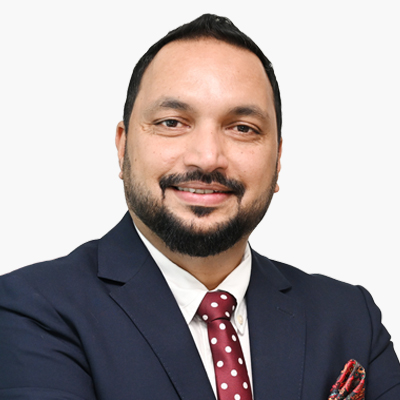

An experienced Human Resources Director who formulates and initiates talent management strategies to attract and retain exceptional people – providing an excellent work environment so that they work in tandem with the organisation’s business goals, which in turn results in client satisfaction and business performance.
August 22, 2024
Today’s smaller accountancy firms have undergone significant transformation compared to a decade ago. The accountancy profession is evolving rapidly, with small and medium-sized practices (SMPs) leading the charge, making them dynamic and promising environments for launching a finance career. Neil Johnson, editor at ACCA Careers, recently discussed this shift with Shibu Abraham, director of HR and administration at Kreston Menon in the UAE. Access the full article here, or read a summary down below.
Mid-tier firms are increasingly appealing to top talent by offering diverse experiences, broader responsibilities, and the chance to build meaningful client relationships, which larger firms may not provide.
Shibu Abraham notes, “Big firms always had the edge in the war for talent, but recently market dynamics have changed. We can provide exposure to diverse industries and a variety of assignments. People get the chance to wear many hats and be involved in all aspects of an assignment rather than do a bit of work on a big project. If you’re willing to roll up your sleeves, take on more responsibility and upskill to better service clients, mid-tier firms offer unparalleled growth opportunities. With us, you get to become our clients’ trusted partners.”
At Kreston, mentoring and feedback are highly valued and informal and personal, as opposed to rigid or overly structured. “The partners and managers are inclined to support the growth of young professionals in their teams,” says Shibu. “You don’t have to wait for the annual performance reviews to analyse training and development needs. As the projects are short-term compared to large firms, interim and assignment-based performance appraisals are possible. The pat on the back matters.”
While small firms may struggle to match their larger counterparts in salaries, mid-tier firms are beginning to see parity. “Our salaries and benefits are almost on par, or at times better than the largest firms for the right talent,” shared Shibu. “We do understand that there is a cost involved in attracting and retaining talent, and we are up for it.”
Shibu highlights how mid-tier firms are increasingly competitive in compensation, recognising the importance of investing in top talent to attract and retain skilled professionals.
August 12, 2024
Trent Limited, the retail arm of the Tata Group and a leading name in India’s branded retail sector, has established a presence in Indian and international markets. Building on the success of its flagship concepts, Trent set its sights on expanding into the Middle East, choosing Dubai, UAE, as the location for its first outlet.
Given the complexities of entering a new market, Trent sought the expertise of Kreston Menon to navigate the legal and operational challenges involved in establishing a presence in Dubai, where Trent wanted to replicate the same operational model targeting both middle and upper middle-class customers. The Kreston Menon team was tasked with advising on the optimal legal structure and managing the incorporation process for Trent’s UAE operations.
The chosen legal structure was a step-subsidiary of Trent’s listed entity in India, which required strict adherence to Indian regulatory requirements. Notably, the 2021 amendments to the UAE Commercial Companies Law, which now permit 100% foreign ownership, were instrumental in facilitating Trent’s entry into the market. Prior to this change, foreign investors were required to partner with a UAE national holding at least 51% equity.
Kreston Menon provided comprehensive support from the initial stages of incorporation through to the entity’s operational readiness. Given the significance of this market entry for Trent and its position as a subsidiary of a large industrial group, multiple meetings were held with top management to address concerns related to compliance, documentation, licensing, taxation, and employment matters. Despite the complexities involved and a registration process that extended over 90 days, the establishment of Trent’s Dubai subsidiary was completed successfully, marking an encouraging first step in the company’s Middle Eastern expansion.
April 11, 2024