99A Makhtumkuli Street
April 17, 2023
April 17, 2023

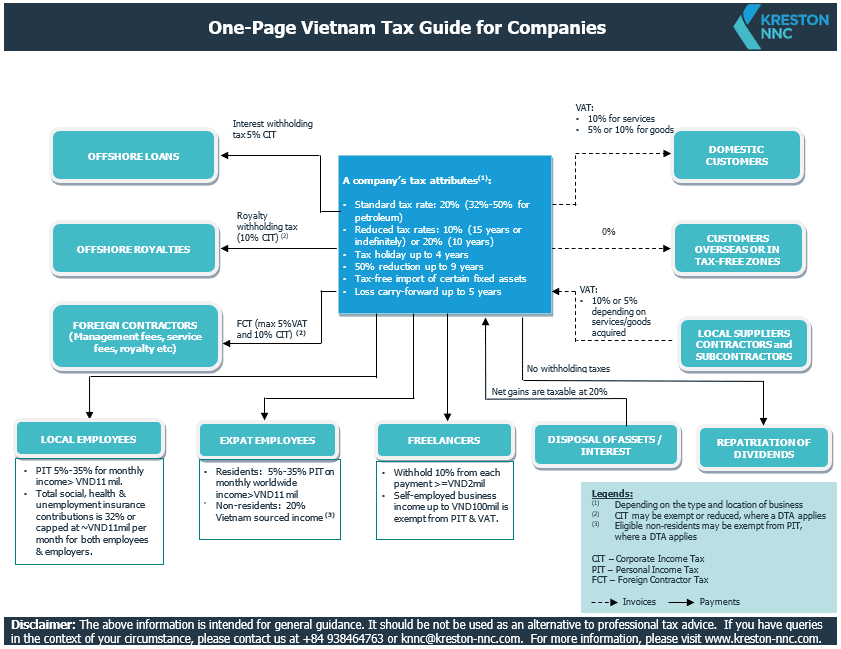
One-Page Vietnam Tax Guide for Companies
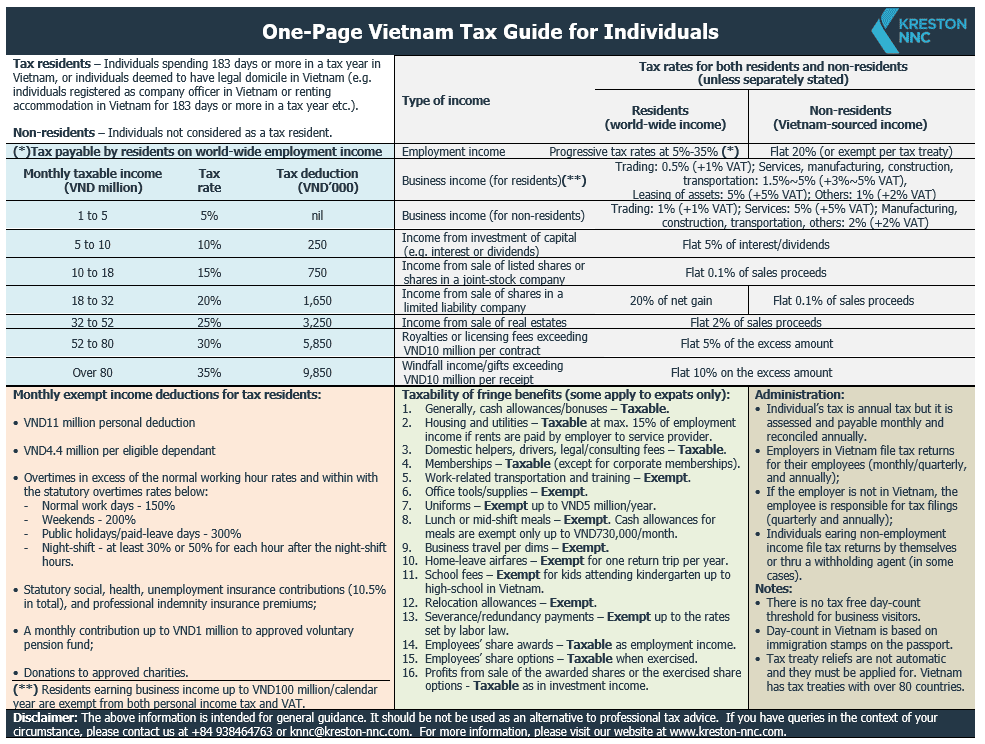
One-Page Vietnam Tax Guide for Individuals

Yiwen Ping is a Senior Manager of Zhonghui China, one of the Top 4 tax agents in China for years. Yiwen Ping holds an MSc in Accounting and Finance from the University of Manchester. With 13 years of experience, Yiwen Ping is a tax consultant with focus on transfer pricing and is an expert in contemporaneous documentation, related party declarations, CbC reporting, multinational corporation profit monitoring, transfer pricing planning, value chain transformation, transfer pricing dispute coordination, and related services. Her clients are mostly listed companies, SOE groups and WFOEs which cover several industries, such as precision manufacturing, commodities, wholesale and retail trade, medical and biopharmaceutical, real estate, IT, and E-commerce.

Susan Li is a highly experienced solicitor and barrister with a wealth of legal expertise in China and Australia. Susan is also a member of several law societies and associations, including the ACLA, Qingdao Law Society of Shandong, and Queensland Law Society. A native speaker of Chinese Mandarin and highly fluent in English, Susan’s experience includes working as a legal and public affairs director for a US Fortune 500 company in South East Asia and Greater China, as well as serving as a senior partner and administrative board chairman at Beijing Jingsh Law Firm. She is currently serving as an International Business CEO at Brighture Tax and Accounting.
R&D tax incentives and policy to support investing in post-Covid China during 2023 are now significantly more appealing to inward investors than in the previous two years. The recent growth target of around 5% is considered cautious by economists given the stronger-than-expected economic activity in 2022.
Despite this cautious tone, many economists have been revising up their estimates for China’s GDP growth in 2023, with some predicting rates as high as 5.8%. This makes it an attractive proposition for investment, however, Kreston Global research also revealed that the Chinese market developed the most outwardly-investing global entrepreneurs or “interpreneurs” than other countries that were surveyed.
Kreston Global experts Yiwen Ping from Zhonghou CPAs and Susan Li from Brighture share their predictions for investment trends in the future, with a focus on balancing revenue and earnings growth with policy alignment and shed some light on this ambitious market and how foreign investors can get involved.
Yiwen: On March 5, 2023, Chinese Premier Li Keqiang pointed out in the government work report that in 2022, China’s annual GDP grows by 3%, and in 2023, the expected target is to grow by about 5%. This should be a moderate number since China’s epidemic prevention and control has entered the normalized prevention and control stage of “Class B and B pipe”.
Susan: In terms of the main economic structure, China is standing at the beginning of a new cycle. This is a new era, a new cycle, Total GDP is rapidly narrowing the gap with the largest economy, and per capita GDP is close to the threshold for high-income countries. The proportion of new infrastructure construction and new energy sources in the economic structure has increased significantly increasing investment in innovation and research and development. The era of real estate development has ended, and a new model needs to be solved. The urbanisation rate exceeded 65% and began to slow. After solving the problem of food and clothing, the people began to pursue a better life and realise their self-value. The ageing of the population with fewer children is accelerating. The economic growth has shifted from demographic dividend and investment-driven to total factor productivity and innovation-driven and is benefiting from the continuous consolidation of its position as a global trade power.
Yiwen: On February 27, China’s State Council issued the “Overall Layout Plan for the Construction of Digital China“, which proposed that by 2025, a horizontal integration, vertical connection, coordination and strong integration promotion pattern will be basically formed, including efficient connection of digital infrastructure, accelerated improvement of the scale and quality of data resources, effective release of the value of data elements, and substantial enhancement of the quality and benefits of the development of the digital economy.
Susan: There are some very important opportunities, such as China being carbon neutral by 2060, and achieving this goal creates huge opportunities in the energy transition into a structurally fast-growing industry. If China’s GDP growth is likely to be moderate, there will be many sectors or investment categories that will grow several times that figure. Whether it’s around new energy vehicles, green infrastructure, electric vehicle battery components, or the supply chain layout, you will see a lot of structural growth over the next few decades.
Susan: Science and technology industry, artificial intelligence industry, and new energy industry
Yiwen: Our new customers are mainly from the semiconductor materials industry, the lithium battery materials industry, the supply chain industry and the new consumption field. From the perspective of our clients, in recent years, China and Southeast Asian countries are the most are the most popular investment regions.
Yiwen: On March 6, the Financial and Economic Committee of the 14th NPC of China held a plenary meeting and adopted the review report on the draft national economic and social development plan for the year of 2023. We recommend that entrepreneurs carefully study these reports and focus on digitalisation and supply chain areas around key industrial chains such as manufacturing to secure growth.
Susan: Product innovation to obtain product pricing power; ensure sufficient human resources; optimize product supply chain; improve technology content and make full use of artificial intelligence technology.
Susan: Tax compliance and sustainable development.
Yiwen: In recent years, with the rapid expansion of China’s capital market, we have found that transfer pricing and R&D have increasingly become the key points of CSRC’s review. Therefore, among our clients, there is a growing demand for planning and advisory services for transfer pricing and the establishment of R&D system.
Susan; In any investment in China, it is very important to balance revenue and earnings growth in the short term, but it is also important to balance it with policy. One characteristic of China is the long-term nature of many policies and the ability of investors to align with them.
Yiwen: Due to the digital focus of the China State Council, It can be seen that the entire technology supply chain, from the supply of equipment and materials in the semiconductor industry chain to the application of software and hardware, will continue to be a hot spot for investment.
If you are expanding into China and would like some investment advice, please get in touch. Yiwen Ping works as a transfer pricing expert and Senior Manager at Zhonghou CPAs, which has 10 offices across China. Yiwen is also a member of the Kreston Global Transfer Pricing Group.
Susan Li is the CEO of the International Business Department at Brighture, with offices in Qingdao and Shanghai, read their regular tax update newsletter here. Susan is also a Regional Tax Director representing Asia on the Kreston Global Tax Group.
Please visit our “Doing Business in China” for general advice on setting up a company in China.
If you would like to find out more about expanding your business into China, fill out the enquiry form below and one of our team will get in touch.

With over 20 years of professional experience in international business and organizational development in France and Thailand, Manuel possesses strong skills in business implementation and has managed operational management as part of an International Transfer Program with one of the world’s largest companies in Thailand and SEA. Additionally, he has experience working with international clients, giving recommendations, and supporting foreign investors in doing business in Thailand. Manuel is an expert in the logistics industry and is qualified in administrative communication, business implementation, business optimization, and safety and security.
A post-pandemic return to travel means the visitor economy should give Thailand the boost it needs to achieve growth. The economy of Thailand is dependent on exports which accounted in 2019 for about 60% of the country’s GDP. In 2022, the economy was projected to expand by 3.4% vs 3.6% only in 2023, reflecting a faster-than-expected decline in global demand.
But the tourism sector recovery, and private consumption, will remain the major drivers of growth. The recent reopening of China to international travel in January 2023 should give a big boost to the recovery of tourism after the almost blank year in 2021 and a year in 2022 at less than 30% of the pre-pandemic figures.
For 2023, Thailand now expects between 25 and 30 million foreign visitors, meaning about 70% of the pre-pandemic figures.
To speak to our experts in Thailand, please get in touch.
With over 20 years of professional experience in international business and organizational development in France and Thailand, Manuel possesses strong skills in business implementation and has managed operational management as part of an International Transfer Program with one of the world’s largest companies in Thailand and SEA. Additionally, he has experience working with international clients, giving recommendations, and supporting foreign investors in doing business in Thailand. Manuel is an expert in the logistics industry and is qualified in administrative communication, business implementation, business optimization, and safety and security.
Thailand is the 8th largest economy in Asia and the 2nd largest economy in Southeast Asia, according to the World Bank, with a population of 66.1 million, stands at the heart of the ASEAN Economic Community, a 10-nation Southeast Asian common market of 663.9 million consumers.
Thanks to its strategic position in Southeast Asia, Thailand serves as a gateway to other destinations. In addition to its excellent connections with the fast-growing neighbouring CLMV (Cambodia, Laos, Myanmar and Vietnam) countries, the powerhouse economies of nearby China and India are also within easy reach.
Excellent digital connectivity, a highly skilled labour force and an excellent standard of living, plus the Thai government’s, comprehensive policies and investment incentives, including the Foreign Business Act of Thailand make Thailand an attractive prospect for foreign investment.
We spoke to Manuel Olliver, CEO at Kreston GSiA Thailand to learn more about doing business in Thailand.
Thailand has become a hub for Chinese investors due to its geostrategic position in the ASEAN free trade bloc, offering access to China and India. Chinese investments in digital economies, crypto, fintech, blockchain, AI, and healthcare have brought significant funding to Thailand. Moreover, Thailand’s extensive infrastructure connectivity plans, including free trade zones and ASEAN integration, have made it an attractive destination for foreign investment. China’s investments in Thailand offer valuable insights into new opportunities for foreign investors looking to invest in the country.
The economy of Thailand is dependent on exports, which in 2019 accounted for about 60% of the country’s GDP. In 2022, the economy was projected to expand by 3.4% vs 3.6% only in 2023, reflecting a faster-than-expected decline in global demand.
But the tourism sector recovery, and private consumption, will remain the major drivers of growth. The recent reopening of China to international travel in January 2023 should give a big boost to the recovery of tourism after very few visitors in 2021 and 2022 at less than 30% of the pre-pandemic figures.
For 2023, Thailand now expects between 25 and 30 million foreign visitors, meaning about 70% of the pre-pandemic figures.
Thailand has been a consistent recipient of Chinese investment for some time, and its geostrategic position as the heart of the ASEAN free trade bloc, with free trade access also to China and India, has made it a hub for many Chinese investors.
This has manifested itself primarily in the drive to digital economies and is building Thailand up both as a connectivity hub, and as a key node for Asia in new tech. Plenty of money is being both raised and made via Chinese investments into various Thai-based initiatives in crypto, fintech, blockchain, and AI, as well as health care including medical tourism.
This, coupled with extensive infrastructure connectivity plans uniting Thailand to ASEAN, and other export markets, and the development of numerous free trade zones (FTZ) is seeing the country take on a highly competitive global role for foreign investment.
So, following where China has been spending and investing its capital can provide foreign investment clues and reveal new opportunities in recipient countries.
Thailand’s Board of Investment (BOI) is the main government agency responsible for promoting foreign investment in the country, offering incentives, ranging from corporate income tax exemption to import duty exemptions on raw materials on businesses that are 100 per cent foreign-owned.
Key investment areas covered by the BOI;
• Agriculture and agricultural products;
• Chemicals, paper, and plastics;
• Services and public utilities;
• Light industry;
• Technology and development;
• Electronics;
• Metal products, machinery, and transport equipment; and
• Mining, ceramics, and basic metals.
Also, the government’s recent approval of a capital gains tax waiver for startup investors is expected to drive funding for local startups up to 320 billion baht over four years and create more than 400,000 jobs, says the Digital Council of Thailand (DCT).
By 2026, the measure is expected to increase the funding for startups to reach 320 billion baht and create more than 400,000 jobs either through direct or indirect employment, which would help strengthen the country’s economic system.
Local and foreign corporate venture capital (CVC) funds and foreign private equity trusts (PE trusts) will see income tax waived for profits derived from the sale of shares in local startups. Investors will see income tax waived for profits from the sale of shares in Thai CVC funds and Thai PE trusts, both of which invest in local startups. Startups linked with targeted industries must be certified by designated organizations, such as the National Innovation Agency and National Science and Technology Development Agency.
The income tax waiver incentive lasts until June 2032.
Thailand aspires to graduate from an upper middle-income to a high-income country by 2037, along with improved security and inclusive and sustainable development, as outlined in the 20-year national strategy (2018-2037). With its recently introduced Thailand 4.0 vision, the government would like to achieve its 20-year strategy through economic upgrading toward a value-based, innovation-driven economy away from the production of commodities and low value-added manufacturing.
Thailand’s vision will not be achievable without progress towards environmental sustainability and socially inclusive growth benefiting all parts of society and regions.
The Thailand 4.0 plan focuses on ten target industries, which can be divided into two groups. The first group focuses on five existing industrial sectors with the aim to add value through advanced technologies: agriculture and biotechnology; smart electronics; affluent medical and wellness tourism; next-generation automotive; and food for the future. The second group includes five additional growth engines: biofuels and biochemical; digital economy; medical and healthcare; automation and robotics; and aviation and logistics.
The industrial and service sectors are the main ones in the Thai gross domestic product, with the former accounting for 39.2% of GDP. Thailand’s agricultural sector produces 8.4% of GDP, lower than the trade and logistics, and communications sectors, which account for 13.4% and 9.8% of GDP respectively. At Kreston GSiA Thailand, we also noted that our clients in the manufacturing and logistics sectors are recovering fast in this post-pandemic period.
As a regional economic centre, with all its numerous advantages, it should come as no surprise that Thailand has become the second home for numerous global MNEs, and a supply chain hub for major industries. These foreign investment activities have been enabled by streamlining government legislation, a growing domestic market, and access to resources such as finance and technical knowledge.
Please visit our “Doing Business in Thailand” for general advice on setting up a company in Thailand.
If you would like to find out more about setting up a business in Thailand, please get in touch or fill out the enquiry form below and one of the team will contact you.

Ganesh has extensive experience of more than 30 years in providing specialist tax services, particularly to large privately owned groups, with particular strengths in the property, retail, healthcare and hospitality industries. He has supported various entities with specialist advice on tax-effective structures and restructures, cross-border transactions on account of outbound and inbound India investments, mergers, acquisitions and divestments. Ganesh has also worked with stakeholders across businesses to deliver solutions such as tax due diligence, tax consolidation and restructuring of large family businesses in the Middle East, Asia, and Singapore.
Investing in India is a compelling opportunity for “interpreneurs”, looking to tap into a rapidly growing economy that is already in the process of overtaking the UK to become the world’s fifth-largest economy. The Reserve Bank of India and the International Monetary Fund predict a 6.8% growth in the Indian economy for 2023.
India is expected to attract $100 billion of foreign direct investment in 2023 with attractive investment opportunities in sectors such as healthcare, renewable energy, information technology, and real estate. The Indian Government has also put in place an investor-friendly policy, making most sectors open for 100% FDI.
Ganesh Ramaswamy, Partner at K Rangamani and Associates LLP and Global Tax Group Regional Director for Asia Pacific advises clients to transition from being founder-led to implementing professional processes, improve corporate governance standards and devising new business models to secure growth in the next 12 months.
Recent research on global investors highlighted India and China as having entrepreneurs that are the most likely to expand globally. Does the data ring true for you in your international client profile?
Both the Reserve Bank of India and the International Monetary Fund, have forecast a 6.8% growth in the Indian economy for the year 2023. The GDP grew by 8.7% in 2022, which was boosted by the pandemic-induced low base of 2021. India continues to be one of the world’s fastest-growing major economies. Steered by decisive leadership, India is rising to the occasion through a significantly enlarged global profile. India is in the process of setting the pace to become a US$ 10 trillion economy in a decade. Therefore, we believe that this brings about tremendous opportunities for our firm in engaging ourselves in international business in future years.
How has the economy changed in the last 12 months?
The Indian economy seems to be moving on after its encounter with Covid-19, staging almost a full recovery in 2022 and is poised to reach the pre-pandemic growth path in 2023. The capital expenditure incurred by the Indian Government increased by over 60% in 2022, from that of the previous years, which was a significant growth driver of the Indian economy. India’s economic growth in 2022 has been primarily led by private consumption and capital formation. The improved health of the private sector banks, has moved them to a better position to increase the credit supply in the market. Consequently, the credit supply to the SME sector has been remarkably high at over 30% in 2022 when compared to previous years. Various agencies, worldwide, continue to project India as the fastest-growing major economy at 6.5% to 7% in 2023.
Some of the business opportunities which are currently looking very attractive in India are the following:
Which sectors are doing well? Have you seen a growth in clients?
Healthcare. renewable energy, information technology, real estate, fast-moving consumer goods and the automobile sectors are currently doing very well in India. According to the Asian Development Bank, the Indian economy is expected to grow by 8% in the next 5 years. Many experts speculate that the Indian stock market, would progress and expand to be the fifth largest in the world, accounting for high market capitalisation.
Most of our clients have gone global. As a result, they expect a lot from us to support their business needs. Some of our clients need a 24/7 accessibility service for their financial data from us. Some of them insist that we should have the latest and most advanced security measures to protect their business data against data breach threats. A large number of our clients need us to understand their overall financial position and devise financial strategies that aid their growth. In fact, all of our clients do not want us to be a mere accounting firm, but become a trusted advisor for them.
What advice are you giving clients to secure growth in the next 12 months?
Our firm advises clients to transition from being founder-led to more effectively implementing professional processes, improving corporate governance standards and devising new business models. We constantly remind our clients about the fact that the digitisation of the world economy has brought substantial disruption to existing business models, and therefore, they need to create more value out of their core businesses to build new innovative models to serve their clients in these rapidly changing times.
India is expected to attract US$ 100 billion of foreign direct investment (FDI) in 2023, on the back of economic reforms and ease of doing business in India. In 2022, the total FDI, inclusive of equity, capital and reinvested earnings, rose by more than 10% over the FDI received in the previous year with a CAGR of 6% for the last five years. The Indian Government has put in place an investor-friendly policy, where most sectors except some strategically important sectors are open for 100% FDI.
Please visit our “Doing Business in India” for general advice on setting up a company in India.
If you would like to find out more about setting up a business in India, please get in touch or fill out the enquiry form below and one of the team will contact you.
Kamal leads the Audit & Assurance and Transaction Advisory Services at Kreston Stanley Williamson and the Kreston Global Regional Audit Director for Asia Pacific. Kamal is an experienced audit, assurance, and business advisory professional who has been in the accounting industry for 20 years. He has serviced a wide range of clients and industries both locally and internationally.

Michael is the managing partner of Kreston Stanley Williamson and has been in the Tax and Accounting industry since 1983. He oversees the running of the firm and manages larger clients in areas such as structuring, tax compliance and planning, commercial issues, succession, and other exits from business, and general business strategy.
A highly skilled workforce and preferential regional trade agreements managed with robust tax planning are still make investing in Australia appealing, even with supply chain issues and inflation challenges.
Thriving sectors such as renewable energy, infrastructure, and real estate and sustainable investing, infrastructure, health care, and real estate are expected to shape the Australian investment landscape, providing potential opportunities. To shed light on these trends and insights, we spoke to Michael Goodrick, managing partner, and Kamal Thakkar, partner at Kreston Stanley Williamson in Sydney.
In recent research on global investors, India and China were highlighted as the countries with entrepreneurs who were most likely to expand. Does the data ring true for you in your international client profile?
Michael: Our client base has not had much exposure to the Indian market. Larger corporates still have a large presence in India with outsourced offshore customer service, administration and finance centres prevalent, but the SME market in our client base does not trade as much with India as other countries around the world. However, there are signs of this changing with increased trading and business ties with India in recent times.
China is still a very important trading partner with Australia and other Asian countries. They provide a lot of products as a supplier to our commercial and manufacturing businesses. China as an export destination has, due to some cross-border and relationship issues, not been as strong a trading partner to a number of countries in the Asia Pacific area as it once was. I am sure these issues will subside and the demand from China for goods and resources from the Asia Pacific region will increase again.
Kamal: With a highly skilled workforce and supportive government, the renewable energy, infrastructure and real estate sectors continue to see significant investment. Australia has been increasing its footprint in trade and other ties with its Asia Pacific neighbours, whilst maintaining its strong ties with the US and UK – these alliances are seeing a greater number of businesses willing to do business in Australia given its skilled workforce and drive for innovation. An area that will compel such inward investments will be the relatively higher tax rates compared to other jurisdictions – careful consideration is therefore needed in terms of the business investment structures and related tax planning.
How has the economy changed in the last 12 months?
Kamal: Like the rest of the world, the Australian economy has undergone significant changes in the past 12 months as it recovers from the impacts of the pandemic and associated lockdowns. The challenges posed by COVID-19 still persist, with continued disruptions in the supply chain and business closures. However, despite all of this Australia has demonstrated resilience and economic recovery in recent months.
Some of this resilience is likely to be from the continued strength of Australia’s mining sector which then provides a peripheral effect on business in related industries. Having said this, recent times have seen significant interest rate rises in a relatively short period of time to tackle inflation. Whilst its most likely warranted, the lack of foresight shown by the Reserve Bank of Australia has caused uncertainty in the economy, the effects of which are likely to still ripple through over the short to mid-term. This is demonstrated by the consistently weak consumer sentiment in the same period.
Michael: The mining and technology industries in Australia continue to do well, as reflected by our firm’s and clients’ growth in these sectors. Cybersecurity has emerged as a major growth area, with continued innovation and investment being driven by the latest security breaches of public companies in this past year.
What advice are you giving clients to secure growth in the next 12 months?
Kamal: The core advice has been to manage cash flows and investment decisions carefully so as not to over-reach. Rising interest rates combined with local and global uncertainty are like to impact even Australia’s so-far resilient economy. However, when opportunities present themselves, and if care has been taken in capital management, clients will be able to invest in such opportunities to secure growth.
Michael: Based on our observations, sustainable investing, infrastructure, health care and real estate are expected to continue shaping the Australian investment landscape. Gaining momentum over most is sustainable investing with a greater emphasis on ESG factors, impacting renewable energy infrastructure and real estate investment considerations.
What new services have clients been requesting?
Kamal: Rather than new services, we have seen an increase in the demand for advisory services, ranging from budgeting and forecasting, and management control, to due diligence and valuations with businesses looking for strategic options for the next stages of their life cycle.
What does the next 12 months look like for your firm?
Michael: Despite the high inflation, high-interest rate environment, and the possible risk of recessionary pressures, our firm expects good growth in the next 12 months. With good growth in our audit division as we bolster the standard and size of audits we are now capable of attending to, as well as our clients growing appetite for cross-border tax and commercial advice, the demand for our services has increased and will continue to do this over the coming 12 months.
Our clients increasing need for outsourced CFO, management account and bookkeeping has also underpinned growth in our management accounting division as well.
Please visit our “Doing Business in Australia” for general advice on setting up a company in Australia.
If you would like to find out more about setting up a business in Australia, please get in touch or fill out the enquiry form below and one of the team will contact you.
R&D tax incentives in China have been made a permanent policy by China’s State Council. This month (March 2023) they announced the extension of supportive tax and fee policies that are aimed at incentivising innovation and supporting industries that were affected by the COVID-19 pandemic. These policies are expected to reduce the annual tax and fee burden on eligible companies by over RMB 480 billion, which is approximately US$69.8 billion.
One of the multiple policies that have been extended in the announcement is the tax deduction for research and development (R&D) expenses. The pre-tax deduction ratio of R&D expenses for certain eligible companies will continue to increase from 75% to 100%, with no expiration date specified. This policy was previously only available to manufacturing enterprises, but the 2022 Government Work Report expanded it to include technology-based small- and medium-sized enterprises (TSMEs) to encourage innovation.
In September 2022, the Ministry of Finance (MOF), State Taxation Administration (STA), and the Ministry of Science and Technology (MOST) temporarily expanded the policy of super deduction of R&D expenses to general enterprises. During the period from October 1, 2022 to December 31, 2022, the ratio for the additional pre-tax deduction for R&D expenses for enterprises that were already eligible was raised from 75% to 100%
The State Council has now announced that this temporary expansion will become a long-term policy, demonstrating the government’s eagerness to support tech innovation. The extended policy will provide more support to eligible companies and encourage them to invest in R&D, which will boost innovation and ultimately drive economic growth.
China’s renewed tax and fee policies are expected to provide much-needed support to industries affected by the pandemic and incentivize innovation through the extension of R&D tax incentives. This is a positive step towards boosting economic growth and ensuring the country’s long-term competitiveness in the global market.
If you would like to learn more about taking advantage of the R&D tax incentives in China, get in touch or read more about tax developments in China here.
March 24, 2023
Kreston firm, Brighture, shares their expertise in their latest March 2023 newsletter covering financial news and updates from China.
March 23, 2023
Kreston Global has maintained its 13th position in the International Accounting Bulletin world survey. Kreston Global continues to enjoy steady growth, with a 4% turnover increase in 2022.
The network has attracted a record number of new firms in recent years and US firm CBIZ MHM has contributed significantly to the growth with key strategic acquisitions, including New York–based Marks Paneth, helping to propel CBIZ MHM from 13th to 8th position in North America regional rankings.
Liza Robbins, Kreston Global Chief Executive commented,
“We are delighted to have retained our global position, although our focus continues to be on delivering real benefits to firms to help them grow and thrive, and less about global rankings.
The fast pace of development of Kreston Global led to a new strategic plan being unveiled in 2021, which embraces the network’s wider purpose-led approach. The new firms that have joined us over the last 12 months have only enhanced the strong ties that connect our firms to each other.
2023 looks set to be another strong year of member growth, with excellent firms interested in joining the network.”
If you are an ambitious, internationally-focused firm that is interested in joining Kreston Global as a member, you can fill out a form to apply to start your application.
March 17, 2023
March 7, 2023
Every year on 8 March, the world celebrates International Women’s Day to acknowledge women’s social, economic, cultural, and political accomplishments. It is also a time to take action towards achieving gender equality and empowering women. This year, Kreston Global aims to highlight some remarkable women within the organisation and gain their perspectives on what it takes to succeed as a woman in the network.
Annie Sun is a highly accomplished professional with nearly two decades of experience in accounting and statistics. She currently serves as the CEO of Brighture, a leading firm in China that specialises in providing expert accounting services to clients across various industries. Founded in 2003, Brighture has rapidly become a key player in the industry, thanks in no small part to Annie’s exceptional leadership and guidance. In 2015, the company joined the Kreston Global network, further cementing its reputation as a leading provider of accounting services in the region.
Why did you decide to run your firm?
Being a professional, I want to help more entrepreneurs succeed.
What qualities do you need to run a successful accounting firm?
To run a successful accounting firm, the endless selection of “professional, integrity and efficient” internal and external clients, namely colleagues and customers, helps.
How do you support equality in your firm?
There are two main points:
We recently surveyed ‘interpreneurs’ – entrepreneurs looking to expand internationally. The data showed that female CEOs were more likely than males to consider expanding overseas. Why do you think this might be?
Female CEOs may be more focused on collaboration and resource integration.
There was a significant indication that existing networks were an attraction to overseas expansion in particular countries; why do you think female interpreneurs value this more than their male counterparts?
The network can maximize the unity, service concept, and standards, which is a guarantee for both the company team and the clients.
What advice would you give female entrepreneurs starting today, or would you give your 28-year-old self?
Attentively adapt to society’s development and clients’ needs, with professional expertise to help them achieve success and stability.
To learn more about doing business in China, click here.
March 6, 2023
If you are planning on investing in Asia Pacific in 2023, Kreston Global has launched a comprehensive guide to expanding into the Asia Pacific region with the new publication, “Doing business in Asia Pacific”. This inaugural edition of “Doing Businesses in Asia Pacific”, written by Kreston Global experts within the region, offers invaluable advice on navigating the market requirements in this region, and setting up investors for success.
Kreston Global capabilities in the Asia Pacific region are both geographically and commercially diverse, with 21 exciting markets and locations, represented by 46 member firms with 146 offices and 6, 000+ professionals across the region, generating over US $490 million in fees each year.
The guide includes detailed features covering the economic outlook for 2023 and recommended sectors that are highlighted by local experts as ready for investment. Australia, China, Thailand and India are larger features, with summaries for New Zealand and Malaysia and plenty of advice on how to practically set up businesses in the region.
February 24, 2023
Kreston Global has welcomed new Bangladesh-based firm Howlader Maria & Co., (HmAC) to the Kreston network.
Howlader Maria & Co., (HmAC) is one of the fast-growing Chartered Accountants firms in Bangladesh. Based in Dhaka, the firm offers audit, accounting, outsourcing, tax, foreign direct investment facilitation & business consulting services to international businesses and foreign subsidiaries based in Bangladesh and overseas. Regardless of the nature or size of the engagement, HmAC insists on the best quality services, working in clients’ best interests while upholding the firm’s values of integrity and professionalism. The people of HmAC are experts in their respective fields and take pride in their problem-solving approach to helping business by easing the challenges they face in doing business at home and abroad.
Howlader Maria & Co., (HmAC) was founded by renowned Chartered Accountant Maria Howlader. Prior to this, Maria was a partner for 11 years in A. Qasem & Co., Chartered Accountants, a member firm of Ernst & Young (EY).
The firm comprises 34 employees. The firm also offers a separate outsourcing service, back office support services for overseas and domestic clients needing help with accounting services such as accounts preparation, payroll and tax compliance – these business outsourcing solutions are provided through HmAC BPO.
Maria Howlader was Vice President of the Institute of Chartered Accountants of Bangladesh (ICAB) in 2021 and is currently a Council /Board member. She is also a Director on the Board of the Japan-Bangladesh Chamber of Commerce & Industry (JBCCI), and a frequent speaker on different forums and chambers in connection with taxation, doing business in Bangladesh and company law.
Maria Howlader, CEO at Howlader Maria & Co. said:
“We are very ambitious for growth in this firm and joining the Kreston network will accelerate this for us both locally and internationally. Being able to help our international clients connect and expand overseas in collaboration with our network colleagues will be hugely beneficial for our future growth and success. I am excited to begin our journey together.”
Liza Robbins, Chief Executive of Kreston Global, said:
“Kreston is delighted to have Maria Howlader join our network as they have such an entrepreneurial mindset which fits beautifully with our Kreston culture and client profile. Our Asia Pacific region is going from strength to strength as a result of Kreston’s collaborative and dynamic firms.”
To learn more about doing business in Bangladesh, click here.
February 14, 2023
Kreston firm, Brighture, shares its expertise in its latest February 2023 newsletter covering financial news and updates from China.
January 25, 2023
Japanese foreign investment almost doubled in 2021 and looks to increase in 2023. Liza Robbins, Kreston Global Chief Executive, and Marek Lehocky, CEO of Kreston ProWorks in Japan were recently invited to comment on this increase in foreign investors entering the Japanese market. Read the full Bloomberg article here or the summary below.
The influx of foreign companies increased a decade ago with then-prime minister Shinzo Abe’s push for inbound investment; however, it decreased during the pandemic. Recently, global tensions between the US and China, and China and Taiwan and the weakening yen and a stagnant wages marker saw investment in Japan double in one year. Inward investment figures topped $20 billion in 2021, creating a new market for accounting firms. There is room for more growth in the Japanese tax, accounting, and audit market, which is mostly dominated by the Big Four.
Foreign direct investment is increasing and has been predicted to increase in 2023 by Martin Schulz, chief policy economist of Fujitsu’s Strategy Planning Division. Japanese government data suggest high growth in 2021 for foreign direct investment fields such as communications, chemicals and pharmaceuticals, electrical machinery, and the finance and insurance sectors. Foreign direct investment is also increasing due to the 21 bilateral free-trade agreements Japan has signed in the last few years. Growth prospects for the Japanese tax, accounting, and audit market remain positive, as there is room for growth among small and medium-sized enterprises with overseas businesses.
Marek’s firm Kreston ProWorks joined Kreston Global in 2022, as he is able to offer complementary services to the other two Kreston Global firms that offer auditing services. Liza Robbins, Kreston Global Chief Executive, sees this new partnership with Kreston ProWorks as an investment gateway for Kreston Global clients.
If you are interested in investing in Japan, get in touch.
January 23, 2023
LONDON – Kreston Global has begun 2023 by welcoming eight new member firms on four continents: India, Uganda, Lebanon, Japan, Croatia, Bangladesh, Chile and Taiwan.
The eight new member firms are:
Kreston Croatia was founded by Managing Partner Ivan Pečur who has worked in a number of international accountancy organisations over the last 16 years as an audit partner. He is joined by two other partners.
Bhatia & Bhatia was founded in 1981 and provides audit, tax and accounting services to a range of domestic and international clients. It works closely with a broad base of affiliated chartered accountant firms across all major cities in India.
Kreston HM was founded by Managing Partner Hitesh Mehta in 2005. It provides audit, accounting services and tax advisory to international and local clients from its offices in Kampala and Jinja. It has three partners and 45 staff.
Accurate Accounting & Audit was founded in 2021 and is led by four certified auditors. It has over 20 staff based in its central Beirut offices, providing services to corporate and private clients across the construction and building supplies, professional partnerships, hospitality, retail and sports sectors.
Maria Howlader and Co is based in Dhaka, Bangladesh and comprises 34 employees and offers audit, accounting and tax services to international businesses and foreign subsidiaries based in Bangladesh and overseas.
Kreston ATC Chile is a newly established firm in Chile, based in Santiago. The firm has 24 staff and five partners, and is led by Managing Partner Hans Caro. The firm is made up of previous Kreston partners including Ricardo Gameroff who is already involved with the Kreston network through the Global Audit and Quality
Groups. The firm has a number of international clients and specializes in external and internal audits, taxes, risk advisory, forensics, payroll and bookkeeping.
Top New & Co is based in Taipei, Taiwan and is returning to the Kreston network after a few months away. Run by Yashu Hung, who is the lead audit partner, together with two other audit partners and a staff of 20, they offer audit and accounting services to a range of privately owned and not-for-profit organisations.
2022 saw Kreston Global holding its hugely successful network-wide conference in Madrid, the first in-person conference the network has held since the pandemic began. 2022 also saw the launch of its first Environmental, Social and Governance Advisory Committee, launch of new international steering groups for Internal Audit, Transfer Pricing and Life Sciences, and lastly a flagship thought leadership report, ‘The Interpreneur Mindset’.
Liza Robbins, Chief Executive of Kreston Global, said:
“It is with great pleasure that I welcome our latest joiners to the Kreston Global network. To have eight firms join in a short period is a major achievement, but to have eight firms of this calibre join is a significant testament to our depth and breadth.
“In recent years we have spent a great deal of time evaluating and fine-tuning our strategy. We have listened closely to our members, working with them on a range of areas and launching a number of exciting new initiatives. I am excited to move into 2023 with both our existing and new colleagues as we continue to develop our proposition to the entrepreneurial business community.”
Get in touch to talk about how Kreston Global firms can help your expanding business in these eight countries.
January 6, 2023